
OUR SERVICES
HIGH QUALITY FILM PROCESSING + FINE ART DIGITIZATION + PRINTING
FILM DEVELOPment
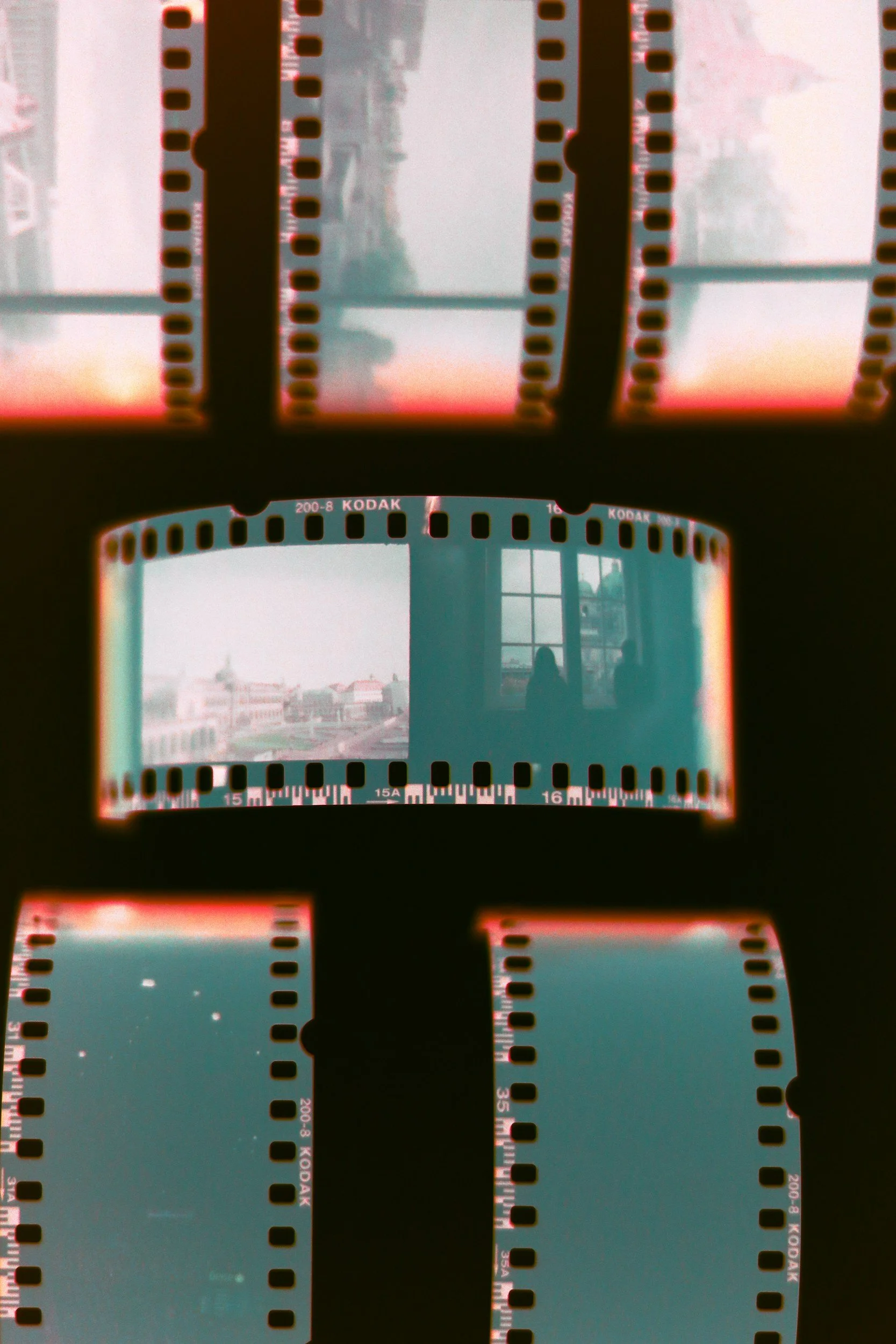
Film developing is the chemical process that turns your exposed roll into permanent negatives or slides.
-
If you’ve shot a roll of film, it needs to be developed before it can be scanned, printed, or viewed.
-
We process color negative, black and white, and slide film, with options for push/pull processing and specialty development requests when needed.
-
Developing is for anyone with exposed film: 35mm, 120, disposable cameras, older rolls, experimental rolls, or film you’re not totally sure about. Once developed, your negatives are cut, sleeved, labeled, and returned to you for long-term storage.
FILM DIGITIZATION
Digitization is the process of scanning film, prints, slides, or other physical media into digital image files.
-
Most people get their film scanned after developing so they can view, share, edit, archive, or print their images.
-
We scan negatives and slides in different file types and resolution options depending on how you plan to use the photos, from basic sharing to larger prints or more detailed editing.
-
Digitization is also available for:
Existing negatives
Old family film
Mounted slides
Prints
Artwork
And odd formats.
If you already have physical media and need usable digital files, this is the service you’re looking for.
photo PRINTING
Everyday printing turns digital files or scanned film into classic photo prints for albums, keepsakes, gifts, and sharing.
-
We offer classic 4x6 glossy photo prints, the kind made for family albums, travel photos, disposable cameras, whole rolls of film, small keepsakes, and handing someone a real photo instead of just sending a file.
-
This is the best fit if you want simple, familiar photo prints without needing to choose paper types, finishes, or fine art options.
hOW to place your FILM order
Download the order form
Fill it out with your service choices
Include THE FORM with your film or media WHEN YOU MAIL OR DROP IT OFF.
-
Mail your media WITH the order form to:
Attn: MEDIAM Film Lab
531 W 4th Ave, Anchorage, AK 99501
-
Drop your media & order form off at Stewarts Photo in Anchorage, AK
Address:
531 W 4th Ave, Anchorage, AK 99501
-
The order form helps us know exactly what you’re sending, what services you need, and how to get your files and materials back to you.
Fill it out as completely as you can, then include the printed form in your package with your film, negatives, slides, prints, or artwork.
Once your order arrives, we’ll log it in, confirm the details, and reach out if anything needs clarification.
After the work is finished, digital files will be delivered by link, and your physical materials will be returned according to the options listed on your form.
-
If you don’t have access to a printer, just use the order form as a guide and write the same details on a piece of paper or sticky note.
Be sure to list your name, phone number, film format, quantity, film type, development process, file type, scan quality, and any extra services like prints or loading files onto a thumb drive.
Frequently Asked Questions
-
Most orders are completed within about one to two weeks.
We work on a weekly batch processingschedule, picking up film from Stewart’sPhoto on Fridays, logging it into the system Monday morning, and returning all completed orders by the following Monday.
As orders are processed, prepaid orders will receive a text with a Dropbox link as soon as their scans are ready.
If your order isn’t prepaid, it will be available for pickup and payment in person at Stewart’s Photo once complete.
-
The most common choices are Standard Developing with JPEGMedium at $24 per roll or TIFF High at $28 per roll.
Standard developing is priced at $12 and scanning ranges from $10–$16 depending on quality and file type.
Each step is billed separately, including developing, scanning, and any optional services like push processing or specialty treatments.
Film is billed per roll, while individual items like prints, slides, or artwork are billed per five units.
For a comprehensive breakdown of our costs and services, Download The Order Form Here.
-
We work with a wide range of still photography formats.
That includes 35mm, medium format 120, 4x5 sheet film, 110, 126, 127,APS, and Minox.
We can process and scan panoramic formats like 6x17 on 120 or 3:1 on135 from cameras like the XPAN orTX-1, and half-frame on 135.
We also digitize mounted slides, Instax, Polaroids, physical prints, drawings, paintings, documents, and other flat artwork.
For Super 8 and 16mm motion picture film, we recommend using a dedicated motion picture lab for the best results.
-
Absolutely.
Disposable cameras contain standard 35mm film, so we process them just like any other roll.
If the camera was used indoors or in low light, push processing is often recommended to help improve brightness and clarity.
If it was used outdoors in daylight, standard processing is typically perfect. Once developed and scanned, your images are delivered just like any other roll, and the negatives are returned for pickup at Stewart’s Photo.
-
The file type really comes down to how you plan to use your photos. JPEG files are smaller, easy to view, and perfect for sharing or everyday use.
They still print very well and are more than enough for most people.
TIFF files are larger and uncompressed, which means they hold onto every bit of detail and are ideal for printing, long-term archiving, or editing in Lightroom or Photoshop.
D.Neg files are also TIFFs, but they’re delivered as unconverted negatives for photographers who want to handle the color conversion themselves using Film Labor Negative Lab Pro.
If you’re not familiar with any of these programs, don’t worry; just stick with JPEGs.
-
We’ll send you a link by text or email:
When you drop off your film, you’ll provide a phone number, and that becomes the main way we communicate with you.
You’ll receive a text when your film is entered into the system and another when your scans are ready.
I’ll send a Dropbox link where you can preview and download your images in full resolution.
You’re welcome to share that link with anyone who may want access.
If texting isn’t your thing, we can also send the link by email, provide a printed QR code, or load your files onto a thumb drive.
-
Always.
Your negatives are your property, and we return them to you after processing.
They’re packaged in archival-quality sleeves designed for long-term protection from dust, scratches, and environmental damage.
If you’d like your negatives left uncut, just leave a note on your order form. Most labs return film in standard plastic sleeves, but I choose true archival storage because I want your film to be protected for the long run.
I don’t expect my clients to know all the best ways to store film... that’s what I’m here for.
-
Yes, and it’s honestly one of the most rewarding parts of the job.
There’s nothing quite like seeing images come back to life after years or even decades.
The results depend mostly on how the film was stored over time.
Film kept in cool, dry environments usually holds up very well, while film stored in hot or humid places may show some fading or color shifts.
Even so, film is surprisingly resilient, and it’s always worth developing to see what memories are still there.
-
Yes. We’re a full service lab.
Push and pull processing is used when your film was shot at a different ISO than it was designed for.
Pushing is typically used when shooting in low light or under exposed film, which helps bring back brightness during development.
Pulling is used when shooting in very bright conditions or overexposed film, helping reduce contrast and highlights. It’s also useful if you accidentally shot your film at the wrong ISO.
We generally recommend staying within a +3 stop Push or a -2 stop Pull to maintain the best image quality.
-
We sure do.
Slide film, also known as E-6, is processed using a different chemistry than standard color negative film, but it’s fully supported here.
Because slide film has very little exposure latitude, accurate exposure is important, but when shot well it produces incredibly vibrant colors, beautiful contrast, and a very true-to-life look.
Many photographers love slide film for its bold contrast, rich color and the way it captures scenes more true to life than color negative films.
-
For 35mm and APS film, we use a Noritsu LS-600, one of the most respected film scanners ever made, known for its color rendering, sharpness, and consistency.
For larger film formats, prints, drawings, and other reflective media, we use an Epson V800, capable of resolving fine details like paper texture and paint strokes.
For sub-miniature formats like 110 and Minox, as well as slide film, we use acustom Hasselblad medium format camera scanning system with a purpose-built light source designed to handle dense, high-contrast emulsions with exceptional sharpness and clarity.
Fine Art Digitization
+ Printing
Fine art printing turns digital files, scanned film, or digitized artwork into higher-quality prints on professional photo and art papers.
-
Artwork Digitization:
Drawings
Paintings
Sketchbooks
Other Flat Media
Fine Art Printing
Digitized Artwork
Framed pieces
Gallery work
Art markets
Portfolio prints
-
We offer fine art printing with 31 paper options across different textures, weights, and finishes, from smooth photo papers to heavier cotton and natural fiber papers.
These are ideal for framed pieces, gallery work, art markets, portfolio prints, gifts, small editions, or reproductions of drawings, paintings, and other flat media digitized through our scanning services.